
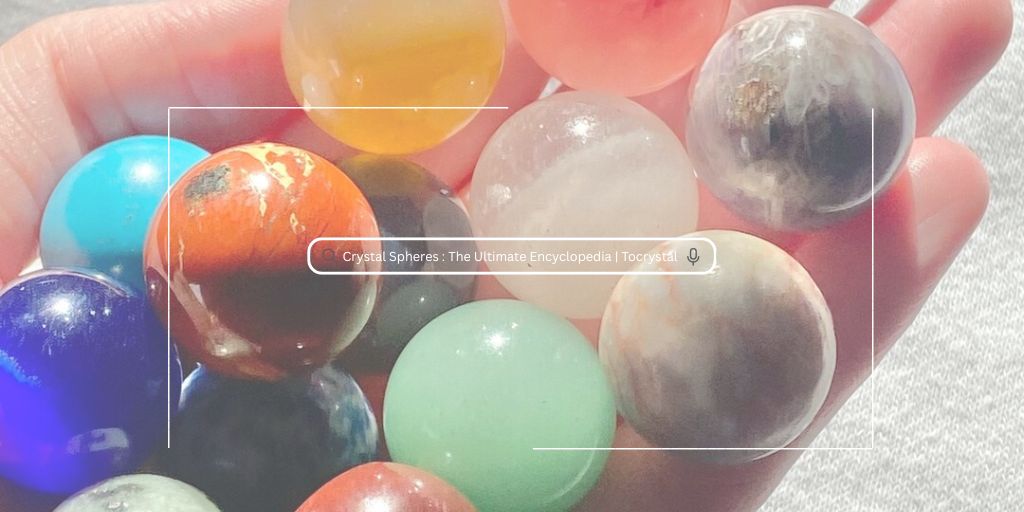
Crystal spheres also called crystal balls are smooth, round stones carved from natural minerals such as quartz, amethyst, obsidian and others.
Today, they’re used for practice, décor, rebuilding oneself, collecting and sometimes scrying.
The carving process removes up to 80% of the original material to achieve their perfectly spherical shape, a form that represents balance, unity and completion across cultures.
Many people feel calm or focused when placing a sphere in their home or holding one during rituals, making these objects valuable both as geological specimens and cultural artifacts.
Crystal spheres have existed for thousands of years. Ancient cultures shaped them for rituals, protection and symbolic purposes and their timeless form has retained its meaning across different traditions.
This encyclopedia-style guide explains everything from history and popular crystal types to uses, zodiac associations, manufacturing methods, care instructions, cultural significance and authentication.
Table of Contents
PART 1 – Ancient Origins & Historical Timeline: A Quick Overview
Crystal spheres have fascinated civilisations for over 6,000 years. Here’s how different cultures used them:
- The Sumerians (4000 BC) – The oldest records show Sumerians used crystals like lapis lazuli and agate in religious ceremonies and as protective amulets in burials.
- Ancient Egypt (3100-30 BC) – Egyptians placed specific stones in tombs to help the dead navigate the afterlife. King Tut’s death mask featured lapis lazuli, carnelian and turquoise not just for beauty but for spiritual protection.
- Ancient Greece (800-323 BC) – Greeks believed amethyst prevented drunkenness and carved wine goblets from it. Warriors rubbed hematite on their skin before battle, thinking it made them harder to wound.
- Ancient Rome (27 BC-476 AD) – By the 5th century, crystal ball gazing was widespread. Though the Christian Church condemned it as demonic, the practice continued secretly. Romans also used crystal sheets as the world’s first window panes.
- The Druids (800 BC-100 AD) – Celtic priests in Britain used polished beryl spheres for divination. Crystal globes found in wealthy graves show they were prized status symbols.
- Medieval Europe (5th-15th Century) – Despite Church bans, crystal spheres remained valuable. They’ve been discovered in high-status burials from England to France often placed with other treasures.
- Renaissance England (1582) – Dr. John Dee, advisor to Queen Elizabeth I used a purple crystal sphere he claimed was given by an angel. The Queen regularly consulted him for guidance on royal decisions.
- Ancient China – For over 5,000 years, Chinese culture viewed crystal spheres as symbols of perfection. A famous 49-pound quartz sphere linked to Empress Dowager Cixi is now in Philadelphia’s Penn Museum.
- Ancient Japan – Japanese tradition saw crystal spheres as dragon hearts, representing power and wisdom. Japanese craftsmen created one of the world’s largest flawless spheres (11.3 inches) during the Meiji period.
- Ancient India – Hindu scriptures from 1500-500 BC documented crystals in Ayurvedic medicine, connecting specific stones to chakras for physical and spiritual practice.
Across all cultures, crystal spheres represented power, spiritual connection and status valued by rulers and priests and throughout human history.
PART 2 – Famous Crystal Spheres & Historical Figures
World’s Most Famous Crystal Spheres
The Smithsonian’s Giant Sphere
Location: National Museum of Natural History, Washington D.C.
History: The world’s largest flawless crystal sphere, carved from a single piece of Burmese quartz with zero imperfections.
The Dowager Empress Sphere
Location: Penn Museum, Philadelphia
Size: 10 inches in diameter, 49 pounds
History: Sold in 1927 with claims it belonged to China’s Empress Dowager Cixi, though it was actually carved from Burmese quartz in 1923. Still the third-largest crystal sphere in the world.
The Wizard of Oz Crystal Ball
Sale Price: $129,000 (2001 auction)
History: The Wicked Witch’s crystal ball from the 1939 film was made of handblown glass, not actual crystal. Its value comes from movie history, not materials.
The Japanese Meiji Sphere
Location: Crow Collection, Dallas
Size: 11.3 inches in diameter
History: Created during Japan’s Meiji period (1868-1912), showcasing masterful Japanese polishing techniques.
Historical Figures Who Used Crystal Spheres
Cleopatra (69-30 BC)
Wore an amethyst ring and reportedly gave crystal spheres as diplomatic gifts to visiting officials.
Queen Elizabeth I (1533-1603)
Regularly consulted advisor John Dee and his crystal sphere for guidance on royal decisions.
She believed his angelic communications through the crystal might reveal the secret to eternal life.
Empress Dowager Cixi (1835-1908)
The de facto ruler of China during the late Qing dynasty.
The 49-pound crystal sphere at Penn Museum is associated with her name, though historical verification of her ownership is uncertain.
Jeane Dixon (1904-1997)
An American psychic who made predictions using a crystal ball.
Her most famous prediction appeared in Parade magazine in May 1956, stating that a Democratic president would be elected in 1960 and assassinated in office. John F. Kennedy was elected in 1960 and assassinated in 1963.
| Important context: Dixon also made many incorrect predictions. She predicted World War III would start in 1958, that Alec Baldwin would fall seriously ill in 1997, and that Ellen DeGeneres would crash a presidential inauguration. None of these occurred. Despite mixed accuracy, Dixon became an advisor to President Nixon after correctly predicting a terrorist attack. She was also part of Nancy Reagan’s circle of trusted astrologers. |
Claude Alexander “The Crystal Seer” (1880-1954)
One of the most successful stage magicians of the 20th century.
His theatrical performances with a crystal ball complete with turbans and robes created the fortune teller stereotype still seen in movies today.
PART 3 – How Crystal Spheres Are Made?
The Manufacturing Process
Step 1: Selecting Raw Material
The craftsman examines raw crystal for cracks, inclusions (internal foreign material), and overall quality. Proper selection minimises waste.
Quality assessment considers:
- Internal fractures (weak points that might break during grinding)
- Clarity (cloudy areas versus transparent sections)
- Color consistency
- Size of the usable area
Step 2: Cutting Into a Cube
Using diamond-tipped saws, workers cut the raw material into a rough cube. This removes the most unusable outer material and creates a symmetrical starting point for rounding.
Diamond is used because most crystals rank 7 on the Mohs hardness scale, requiring equally hard cutting tools.
Step 3: Grinding the Corners
The cube’s corners and edges are ground down using rotating diamond grinding wheels. This gradually transforms the cube into a rough sphere through multiple stages:
Remove the eight corners → Grind down the twelve edges → Smooth the transition areas → Continue refining toward a true sphere
Step 4: Progressive Polishing
Once roughly spherical, the polishing process begins. This uses progressively finer abrasive grits:
- Coarse grit (60-80): Removes major irregularities
- Medium grit (120-220): Smooths out coarse scratches
- Fine grit (400-600): Creates initial shine
- Very fine grit (800-1200): Enhances clarity
Each stage removes scratches from the previous stage while making the surface progressively smoother.
Step 5: Final Buffing
The final polish uses cerium oxide or tin oxide powder on a soft felt wheel. This creates the glossy, mirror-like finish characteristic of quality crystal spheres.
For large spheres, this entire process can take several days to weeks. The world’s largest spheres required months of continuous polishing, with constant monitoring to prevent even tiny errors that would ruin the entire piece.
Why are Crystal Spheres Expensive?
- Material Waste: Approximately 80% of the raw crystal is ground away during sphere creation. A 2-inch sphere might start as a 6-inch raw piece.
- Time Requirements: Small spheres (1-2 inches) take hours. Medium spheres (3-4 inches) take days. Large spheres (5+ inches) take weeks to months.
- Skilled Labor: One grinding error can create flat spots or asymmetry, ruining the entire piece. Craftsmen require years of training.
- Equipment Costs: Diamond tools are expensive and wear out over time, requiring constant replacement.
- Raw Material Scarcity: High-quality, flawless crystal is rare. Most raw crystals contain fractures, clouds, or color inconsistencies.
PART 4 – Crystal Sphere Types
Clear Quartz Sphere
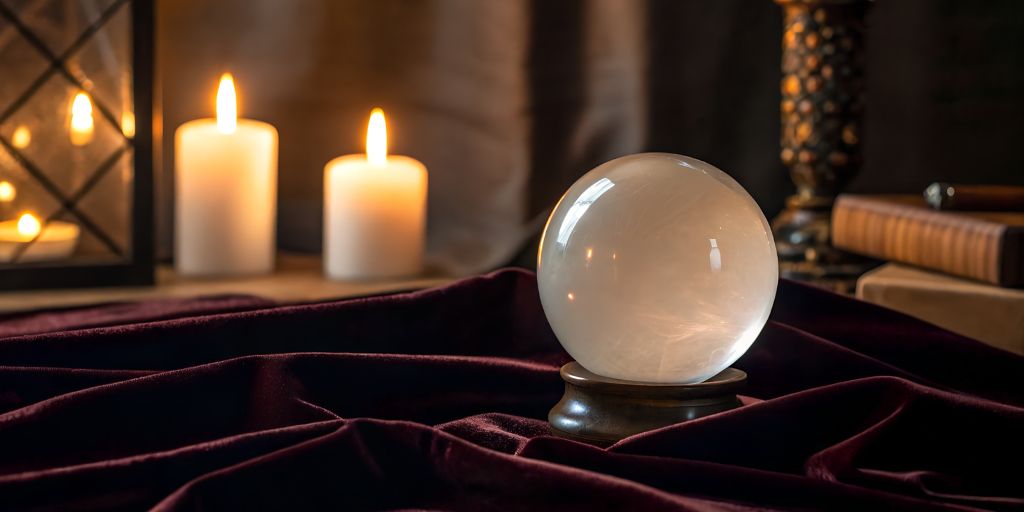
- Appearance: Colorless and completely transparent in its purest form, although inclusions can give it a cloudy or milky white appearance
- Hardness: Ranks 7 on the Mohs scale of mineral hardness
- Uses: Jewellery, scrying, crystal grids, general all-purpose work
- Properties: Amplify zeal, enhance clarity and align all chakras especially the Crown, making it known as a powerful “master healer”
- Care: Clean Clear Quartz spheres gently with mild soapy water, avoid harsh chemicals and sudden temperature changes. Store separately to prevent scratches. Many users also energetically cleanse it with moonlight or smudging
Amethyst Sphere
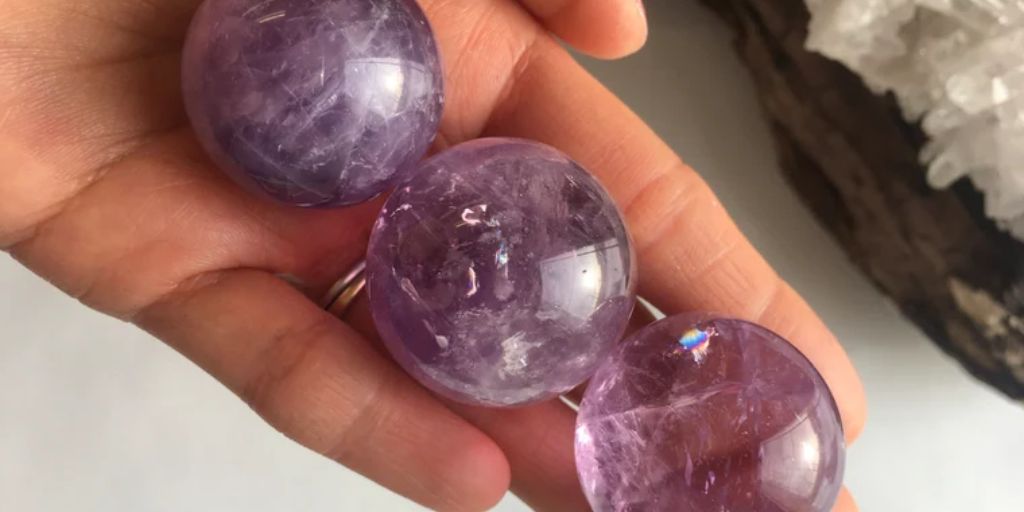
- Appearance: Ranges from light violet (“Rose de France”) to deep royal purple
- Hardness: 7 on the Mohs scale
- Uses: Jewellery, home décor and stress-relief practices
- Properties: Believed to promote calmness, enhance intuition and spiritual awareness, support sleep and balance the mind
- Care: Clean Amethyst spheres with warm soapy water. Avoid steam cleaners, high heat and prolonged sunlight to prevent fading. Store separately from harder stones.
Rose Quartz Sphere
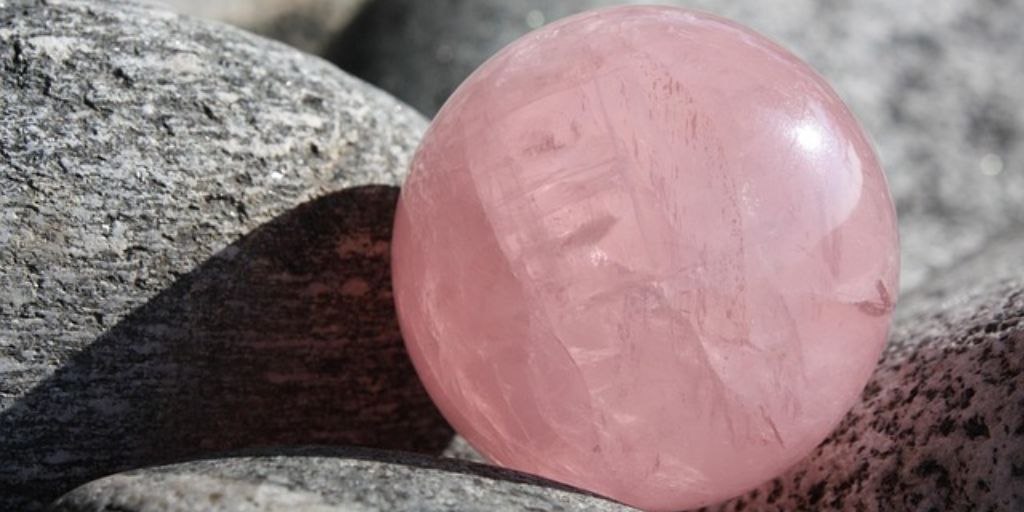
- Appearance: Soft rosy pink, usually translucent or cloudy with a glassy lustre
- Hardness: 7 on the Mohs scale
- Uses: Jewellery, carved décor pieces, facial rollers and Feng Shui
- Properties: Rose Quartz spheres are associated with unconditional love, compassion and emotional harmony strongly connected to the Heart Chakra.
- Care: Clean with warm soapy water. Avoid sunlight, harsh chemicals, ultrasonic/steam cleaners and sudden temperature changes. Store separately to prevent scratches.
Labradorite Sphere
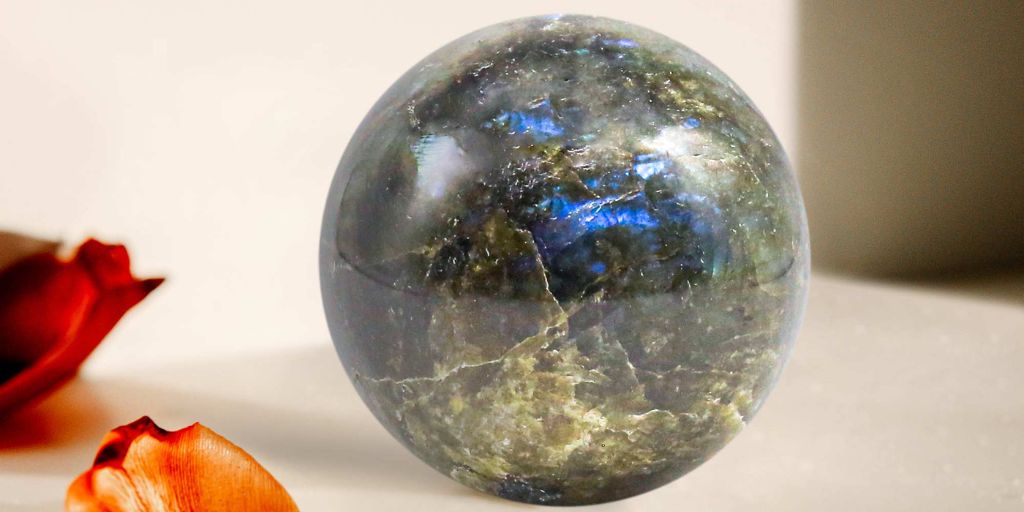
- Appearance: Dark gray to greenish-black base with vivid blue, green and gold iridescent flashes (labradorescence)
- Hardness: 6–6.5 on the Mohs scale
- Uses: Jewellery, decorative carvings and spheres, intuition work and protective talismans
- Properties: Known as the “stone of transformation,” Labradorite spheres are believed to enhance intuition, stimulate creativity and provide energetic protection
- Care: Clean with warm soapy water. Avoid harsh chemicals, ultrasonic/steam cleaners, impacts and prolonged sunlight. Store separately to prevent scratches
Hematite Sphere
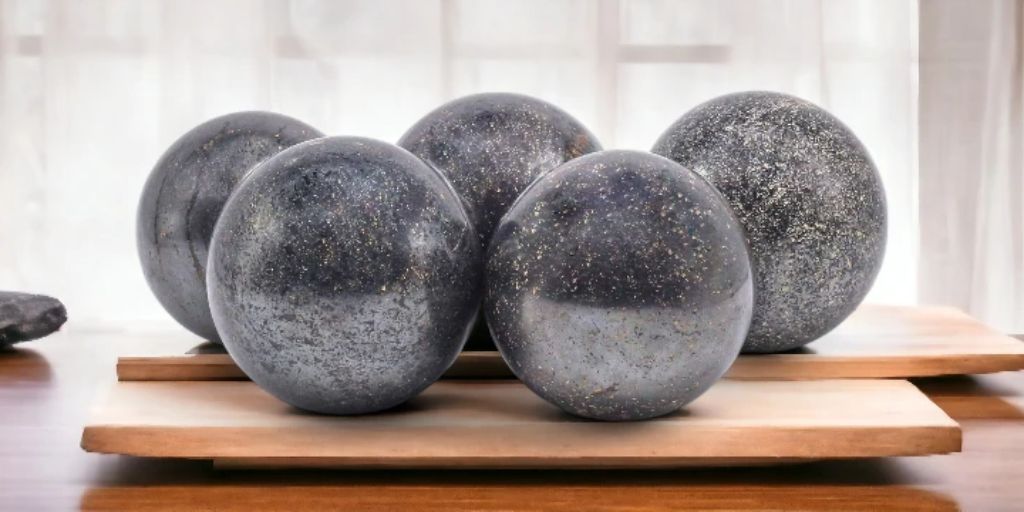
- Appearance: Metallic steel-gray to black or reddish-brown
- Hardness: 5–6.5 on the Mohs scale
- Uses: Jewellery, carved décor pieces, polishing compounds and primary iron ore
- Properties: Hematite spheres are believed to provide grounding, focus, protection and Root Chakra balancing known for its dense, heavy feel
- Care: Keep dry to prevent rusting and clean with a soft dry cloth. Avoid harsh chemicals, ultrasonic cleaners and impacts. Store separately to avoid scratches
Black Obsidian Sphere
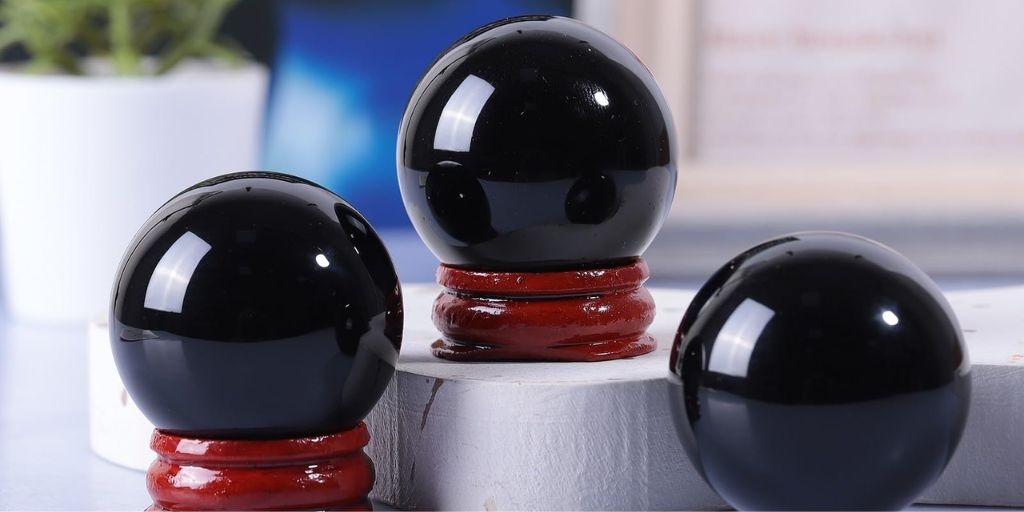
- Appearance: Deep black volcanic
- Hardness: 5–5.5 on the Mohs scale and naturally brittle with sharp conchoidal fractures.
- Uses: Jewellery, carvings, protective décor, grounding work and scrying
- Properties: Believed to offer strong protection, grounding and emotional release
- Care: Clean with mild soapy water. Avoid harsh chemicals, ultrasonic/steam cleaners, impacts and prolonged sunlight on Obsidian crystal. Store separately to prevent scratches or chipping.
Other Popular Crystal Sphere Types
- Citrine– Yellow to golden. Associated with abundance, prosperity, confidence and the Solar Plexus Chakra. Commonly used on work or trading desks.
- Smoky Quartz– Brown to gray and transparent. Known for grounding, calmness, and transforming negativity into stability.
- Fluorite– Purple, green, blue or rainbow banded. Used for mental clarity, focus, organisation and study support.
- Selenite– White to clear with a soft, silky glow. Known for cleansing spirit and spiritual activation.
- Moonstone– White or peach with a blue shimmer. Linked to intuition, emotional balance, the divine feminine, and new beginnings.
- Pyrite– Metallic gold, often called “fool’s gold.” Symbolises wealth, confidence, protection, and manifestation.
- Lapis Lazuli– Deep royal blue with gold flecks. Historically prized in Ancient Egypt for truth, wisdom, intuition, and spiritual insight.
- Malachite– Vibrant green with distinctive banding. Associated with transformation, protection and the heart chakra.
PART 5 – How to Identify Real vs. Fake Crystals?
Real Crystal Characteristics
- Temperature: Stays cool to the touch even after holding for several minutes. Genuine crystal conducts heat slowly due to its crystalline structure and density.
- Weight: Heavier than glass of the same size. Crystal has higher density than glass. A 2-inch quartz sphere weighs approximately 200-250 grams, while glass sphere would weigh 150-180 grams.
- Inclusions: Natural imperfections, tiny fractures, mineral deposits inside. These are normal in genuine crystals and actually verify authenticity.
- Color Variations: Natural stones show slight color differences throughout the sphere. Perfectly uniform color is suspicious.
- Hardness: Real quartz ranks 7 on Mohs scale versus glass at 5.5. Quartz can scratch glass (though this test damages both items).
Fake Glass Characteristics
- Temperature: Warms quickly when held in hand. Glass reaches body temperature within 1-2 minutes.
- Weight: Lighter than real crystal of equivalent size.
- Bubbles: Tiny air bubbles visible inside (use magnifying glass or bright light). These form during glass manufacturing. Natural crystals never contain air bubbles.
- Perfect Clarity: Suspiciously perfect if no inclusions at all. While flawless natural crystals exist, they’re extremely rare and expensive.
- Uniform Color: Perfectly consistent color throughout with no variation.
Specific Authenticity Tests
The Cold Test
- Place both the suspected sphere and a known real crystal in the refrigerator for 10 minutes
- Remove both simultaneously
- Real crystal stays cold much longer (15-20 minutes)
- Glass warms to room temperature within 5-10 minutes
- This test works because crystal has different thermal conductivity than glass.
The Light Test
- Hold the sphere up to strong light (window or flashlight)
- Real crystal often shows internal fractures, rainbow effects from light refraction or slight cloudiness
- Glass appears more uniformly transparent
- Natural inclusions (tiny minerals, frost patterns) indicate authenticity
The Scratch Test (Use With Caution)
Real quartz (hardness 7) can scratch glass (hardness 5.5). However, this test damages both items and should only be used if you’re willing to risk damaging them.
| Note: Better to use non-destructive tests first. |
Professional Verification
For expensive purchases, consider:
- Gemological certification: Professional labs can verify mineral composition
- UV light testing: Some crystals fluoresce under UV light in specific ways
- Refractometer testing: Measures how light bends through the material (different for each mineral)
PART 6 – Modern Uses & Applications
Industries Using Crystal Spheres
Tech Industry (Silicon Valley)
Many tech company offices display crystal spheres in common areas or on employee desks. Clear quartz appears frequently, associated with clarity and focus. Some startups place large crystal spheres in lobbies as conversation pieces and decorative elements. Companies report using them to create specific workplace atmospheres.
Restaurants & Hospitality
High-end restaurants and hotels place crystal spheres in entryways or dining rooms. Rose quartz spheres commonly appear in gathering spaces. The practice combines decorative appeal with intentional design philosophy focused on creating welcoming environments.
Finance & Trading Floors
Some financial traders keep small crystal spheres on their desks. Citrine (yellow/gold crystal), associated with abundance and wealth in traditional beliefs, appears frequently. While professionals may not openly discuss these practices, informal surveys indicate their presence in financial workspaces.
Wellness Centers & Spas
Wellness facilities extensively use crystal spheres: amethyst in relaxation rooms, clear quartz in treatment spaces, rose quartz in waiting areas. This has become standard practice in the wellness industry.
Yoga Studios & Spa Centers
Most yoga studios contain at least one crystal sphere. They’re used in calming circles, placed in corners for spatial design, or incorporated into practice sessions.
Interior Design & Home Staging
Professional interior designers use crystal spheres as statement pieces. A large labradorite or amethyst sphere on a coffee table creates visual interest and serves as a conversation starter. Home stagers use them to make spaces feel more luxurious and visually balanced.
Professional Users by Category
Research indicates crystal sphere purchases from:
- Practitioners & Reiki therapists: Professional tools for their practice
- Yoga instructors: Studio equipment and personal use
- Therapists & counselors: Creating calming office environments
- Creative professionals: Writers, artists, designers seeking reduced creative blocks
- Corporate executives: Desk décor serving dual purposes as stress relief tools
- Retail shop owners: Crystal shops, metaphysical stores, gift boutiques
- Interior designers: Client projects and staging work
- Students: Particularly for study spaces
- Collectors: People collecting minerals and geological specimens
PART 7- What People Actually Do With Crystal Spheres?
Intuition & Mindfulness
The most common use. People hold spheres or place them as focal points.
Their smooth, round shape is naturally calming, and the weight in your hands provides a physical anchor for focus.
Home & Office Decoration
Crystal spheres make stunning decorative pieces.
They catch light, showcase unique patterns and serve as conversation starters on desks, bookshelves, windowsills, mantels and coffee tables.
Stress Relief
Small spheres are often kept on desks to hold during stressful moments.
Their cool, smooth surface can be soothing and some people use them to gently massage tense neck or shoulder muscles.
Feng Shui
Strategically placed spheres are believed to balance chakras.
Southwest corner: Relationships and partnerships
Southeast corner: Wealth and abundance
Center of space: Health and wellness
North position: Career and life path
Gifts
Crystal spheres make meaningful presents. Amethyst for stress relief, rose quartz for love and relationships, clear quartz for new beginnings and citrine for prosperity or business success.
Sleep Support
Amethyst spheres are often placed on nightstands or under pillows (small ones) to promote restful sleep and reduce nightmares.
Scrying (Crystal Gazing)
The traditional mystical use. People gaze into clear quartz or obsidian spheres to gain intuitive insights, usually in dim lighting and a relaxed state.
Photography & Social Media
Crystal spheres are visually striking, making them popular for Instagram, TikTok and other photography setups. They are often paired with candles, plants, journals or other aesthetic props.
Crystal Grids
Practitioners use spheres as central points in geometric crystal grids. The spherical shape radiates in all directions, while surrounding crystals amplify or direct specific intentions.
Collecting
Many enthusiasts collect crystal spheres of different types and colors, building a rainbow-like collection for display or personal enjoyment.
PART 8 – Zodiac Signs & Birth Month Connections
Fire Signs (Aries, Leo, Sagittarius)
- Aries (Mar 21 – Apr 19): Carnelian for confidence and motivation; Red Jasper for grounding and patience.
- Leo (Jul 23 – Aug 22): Tiger’s Eye to enhance leadership and courage; Sunstone to boost joy and creativity.
- Sagittarius (Nov 23 – Dec 21): Turquoise for truth and adventure; Amethyst for spiritual insight and inner peace.
Earth Signs (Taurus, Virgo, Capricorn)
- Taurus (Apr 20 – May 20): Rose Quartz for emotional balance and self-love; Emerald for patience and abundance.
- Virgo (Aug 23 – Sep 22): Amazonite to open the heart and ease stress; Carnelian to boost motivation and overcome perfectionism.
- Capricorn (Dec 22 – Jan 20): Garnet to enhance determination and success; Onyx for strength during challenges.
Air Signs (Gemini, Libra, Aquarius)
- Gemini (May 21 – Jun 21): Agate for grounding and calm; Citrine to sharpen focus and improve communication.
- Libra (Sep 23 – Oct 23): Lapis Lazuli for wisdom and clear decision-making; Rose Quartz for love, balance, and harmonious relationships.
- Aquarius (Jan 21 – Feb 18): Amethyst for intuition and clarity; Aquamarine to encourage emotional freedom and creative ideas.
Water Signs (Cancer, Scorpio, Pisces)
- Cancer (Jun 22 – Jul 22): Moonstone for emotional harmony and intuition; Amethyst for spiritual awareness and calm.
- Scorpio (Oct 24 – Nov 22): Black Obsidian for protection and emotional release; Malachite to transform old patterns and promote growth.
- Pisces (Feb 19 – Mar 20): Aquamarine for peace and clarity; Amethyst to reduce stress and emotional tension.
If you’re looking for your birth month crystal sphere, browse Tocrystal’s collection to find spheres in your birthstone.
Chinese Zodiac & Crystal Associations
| Animal | Crystals | Purpose |
| Rat | Citrine, Tiger’s Eye | Prosperity, good fortune |
| Ox | Rose Quartz, Jade | Stability, patience, emotional balance |
| Tiger | Tiger’s Eye, Carnelian | Courage, strength |
| Rabbit | Moonstone, Rose Quartz | Harmony, emotional comfort |
| Dragon | Clear Quartz, Amethyst | Power, clarity, spiritual insight |
| Snake | Malachite, Emerald | Wisdom, transformation, intuition |
| Horse | Topaz, Turquoise | Freedom, adventure |
| Goat/Sheep | Jade, Aventurine | Calmness, luck, harmony |
| Monkey | Agate, Jasper | Creativity, adaptability |
| Rooster | Citrine, Pyrite | Confidence, success |
| Dog | Jasper, Hematite | Loyalty, grounding, protection |
| Pig | Amber, Agate | Generosity, emotional warmth |
PART 9 – How to Care for Your Crystal Spheres?
Physical Care
Handle Carefully
Crystal spheres can roll and break easily. Always keep them on a stable stand or a soft cloth when displaying or handling them.
Keep Them Clean
For water-safe crystals
Stones like clear quartz, amethyst, and rose quartz can be gently washed with lukewarm water and mild, natural soap. Rinse well and dry with a soft cloth.
For water-sensitive crystals
Stones such as selenite, malachite, and lapis lazuli should not be exposed to water. Use a soft, dry brush or microfiber cloth to wipe away dust.
Protect from Sunlight & Temperature Changes
- Many colored crystals can fade if left in direct sunlight.
- Clear spheres can focus sunlight like a magnifying glass and may create a fire risk so avoid placing them in bright, direct sun.
- Sudden temperature changes or extreme heat can cause cracks, so keep spheres in stable, moderate environments.
Store Safely
- Softer crystals (Mohs hardness under 5) should be stored separately in soft pouches to prevent scratches.
- Don’t keep all your stones in one container where they can bump and chip each other.
- People who use spheres for scrying often cover them with a dark cloth when not in use to protect them from dust and maintain their energetic “stillness.”
Energetic Care (Optional)
If you use your sphere for rituals and practice or scrying, you may want to cleanse and charge it from time to time.
Cleansing Methods
- Moonlight: Safe for all crystals. Leave your sphere under the full moon overnight.
- Smoke: Pass it through the smoke of herbs like sage or palo santo.
- Sound: Use a singing bowl, tuning fork, or chimes to clear the aura with vibration.
- Other crystals: Place your sphere on a selenite slab or near a quartz cluster to help clear stagnant force.
Charging Methods
- Moonlight: Cleanses and charges at the same time.
- Sunlight: Use sparingly, only for sun-safe stones like clear quartz or carnelian, and avoid long exposure.
- Earth: Bury the sphere in soil for a day to reconnect with grounding Earth (only if the crystal is safe to place in soil).
Part 10 – Cultural Perspective on Crystal Spheres
American Culture
Crystal spheres gained popularity in the 20th century through the New Age movement. They are used for decoration, intention-setting and stress relief.
European Culture
Europe has a longer documented history of using crystal spheres, from Druid traditions to royal courts. They are also collected as mineral specimens.
Asian Culture
China
Symbols of unity and balance; used in traditional medicine and Feng Shui.
Japan
Connected to symbolism of the dragon’s heart; admired for clarity and craftsmanship.
India
Linked to chakras, rituals and Vedic astrology.
PART 11- Hidden Knowledge & Fascinating Facts
Fire Hazard
Clear crystal spheres can act as magnifying lenses and concentrate sunlight. There are documented cases of them causing heat damage when placed near windows.
The Ganzfeld Effect
Scrying works through a psychological effect where the brain starts generating images when you stare at a uniform visual surface for long periods.
Quartz Science
Quartz is piezoelectric, meaning it creates an electric charge under pressure. This is why it is used in clocks, sensors, and electronics.
Viking Sunstone Theory
Some historians theorize that Vikings used calcite crystals to navigate by revealing the sun’s position. This is debated, but experiments show it can work.
Medieval Crystal Magnifiers
Polished spheres were sometimes used as early magnifying tools. This explains some legends about “magical messages appearing.”
Museum Crystal Spheres
- Smithsonian: one of the largest flawless quartz spheres
- Penn Museum: large quartz sphere linked to the Qing Dynasty
- British Museum: John Dee’s crystal sphere and obsidian mirror
Wholesale Crystal Spheres from Tocrystal
Tocrystal has been a trusted wholesale supplier of genuine crystal spheres since 2018, serving collectors, shops and wellness practitioners worldwide.
Why Tocrystal?
- Authentic semi-precious crystals (never glass)
- Photo confirmation before shipping
- No minimum order
- Free worldwide shipping over $199
- 600+ crystal products
- Ships to 30+ countries
- Trusted by 2,500+ businesses
Conclusion
Crystal spheres have travelled through thousands of years of human history from ancient tombs and royal courts to today’s home spaces and collections. Their appeal lies in a mix of beauty, craftsmanship, cultural symbolism and natural geology.
Understanding where they come from, how they are made and how to identify and care for them helps you appreciate their value beyond trends. Whether someone uses them for design, history or simple enjoyment, crystal spheres remain meaningful objects that connect ancient traditions with modern life.
You can choose a sphere based on its appearance, material, cultural meaning or simply because it feels right in your space.
There is no single “correct” way to use one; your purpose and curiosity are enough.