
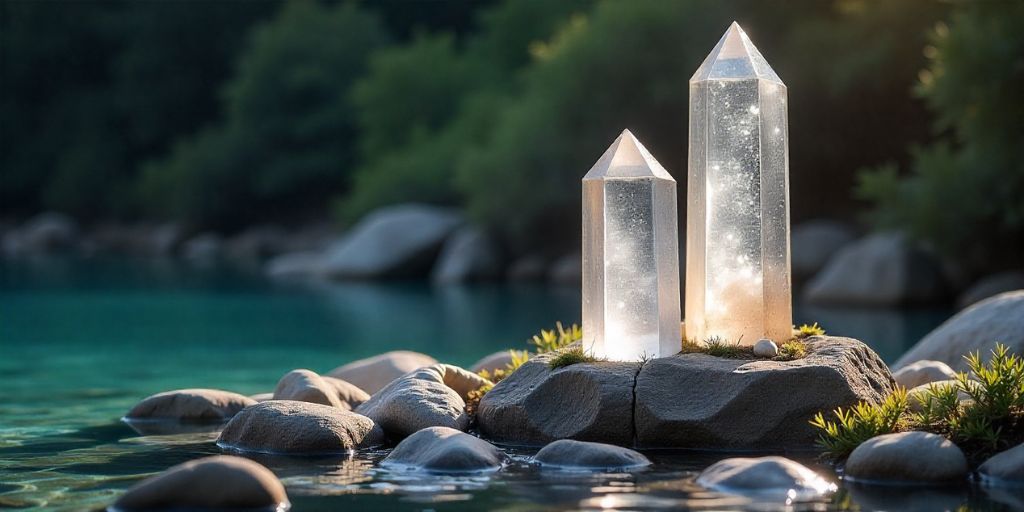
Crystal towers have become one of the most chosen crystal forms for collectors, stylists and anyone who enjoys natural pieces on their shelves or desks.
A crystal’s shape affects how people experience it. Spheres offer a soft, even presence while towers create a more focused upward lift.
Their upright form, smooth sides and pointed tip give them a clean, refined look that works well in both simple and ornate interiors.
This guide covers the essentials i.e. where crystal towers come from, the shapes you’ll find, how they’re made, common uses, how to choose the right size and finish and how to care for them properly.
It’s designed for readers who want clear, reliable information before buying, displaying or maintaining a tower, with each section written in a way so anyone can follow along even without previous knowledge of stones or geology.
Table of Contents
What is a Crystal Tower?
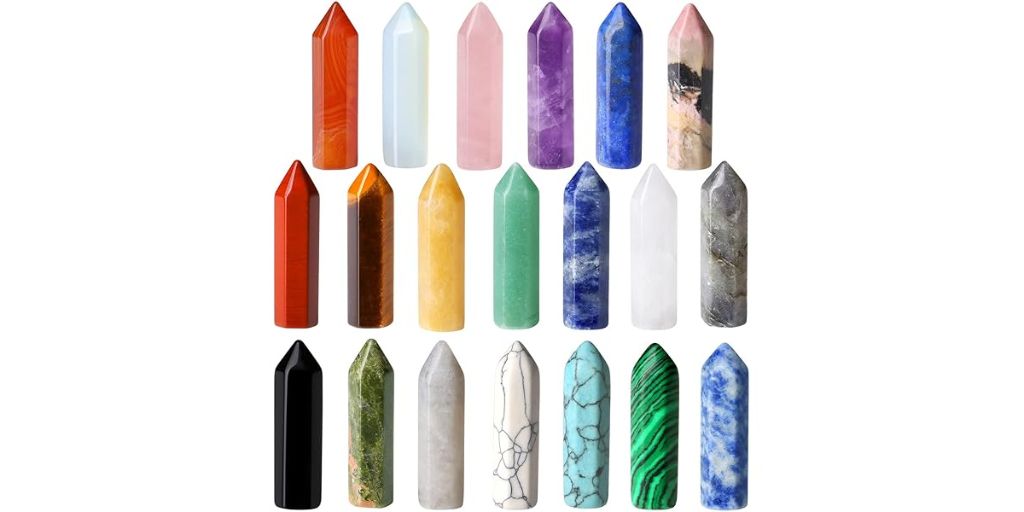
A crystal tower is a tall, polished piece of mineral shaped into a tapered point, often with six smooth sides that meet at the tip. Its form resembles a slim pyramid or a miniature spire.
Towers can be made from many different crystals and skilled artisans cut and refine the raw material until it stands upright with a clean finish.
Clear quartz towers remain one of the most popular choices because of their striking clarity and versatility.
Across many cultures, pointed crystal shapes have long been used in symbolic and spiritual practices.
Towers are often placed in personal spaces to support focus, clarity and a sense of calm intention. Some people display them simply because they bring sculptural beauty to a room, while others use them during reflective routines.
In any setting, a crystal tower offers a graceful blend of natural design and human craftsmanship, making it a meaningful addition to both decorative and personal rituals.
PART 1: Crystal Tower Shape Origin
Crystal towers come from two main sources.
- Naturally grown crystal points and
- Human-shaped, polished towers.
Although they look similar, their origins are completely different.
Natural Tower-Like Shapes (Euhedral Crystals)
Some crystals naturally grow into tall, pointed shapes. These are called euhedral crystals meaning the mineral had enough space and time to develop its ideal geometric form.
When minerals crystallize slowly from cooling magma or from mineral-rich fluids, their atoms arrange themselves into repeating, orderly patterns. This internal structure determines the outer shape.
For example, quartz belongs to the hexagonal crystal system. When it grows freely without interruption, it forms six-sided prisms that taper into a natural point, the same silhouette we associate with a tower today.
These natural crystal “towers” are simply the mineral expressing its crystal lattice in physical form.
Man-Made Crystal Towers (Polished and Shaped)
Most crystal towers sold today, however, are not natural points. They are cut, shaped and polished by lapidary artists from larger pieces of rough stone.
The base is flattened so the piece can stand upright and the top is carved into a point to mimic the clean energy-directing look of natural crystal terminations.
This manufactured form allows many stones that don’t naturally grow as crystals such as agate, obsidian or uneven quartz chunks to be shaped into tower-like forms.
These carved towers are popular in metaphysical and decorative use because the pointed top is believed to “focus and direct” energy upward.
In short, the crystal tower shape either comes naturally from a crystal’s own geometry or is created through modern polishing techniques that turn almost any mineral into a standing, sculpted point.
PART 2: Types of Crystal Towers
Natural Crystal Points With Cut Base
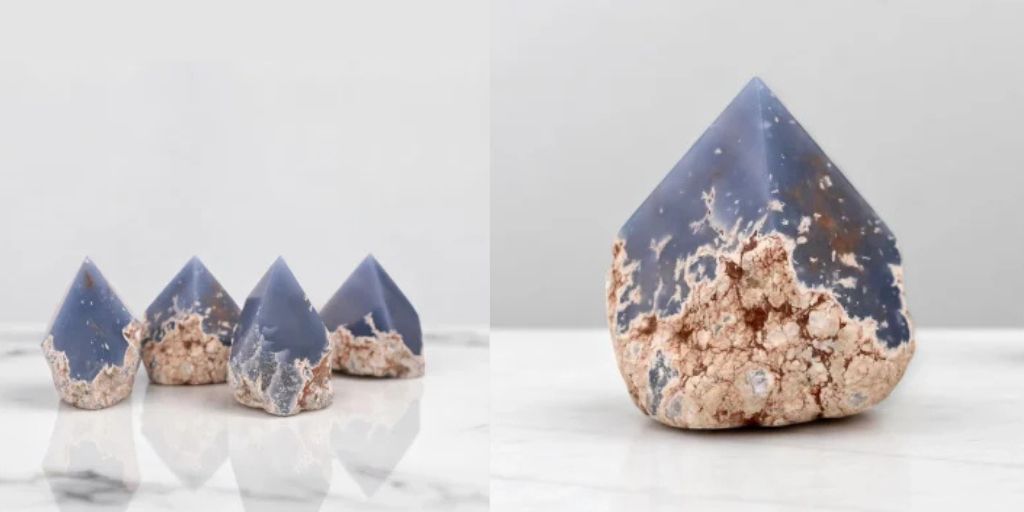
A natural point grows on its own in the earth. It offers a more raw, organic aesthetic.
When taken from the cluster, the bottom is often uneven. To turn it into a standing tower, cutters trim the base to allow it to stand upright.
The sides and termination remain untouched. It is usually shorter than polished tower, shows raw textures, natural chips from mining and irregular faces that reflect true geological growth.
Because this particular tower shape is relatively rare and maintain much of its original form, some collectors believe they carry stronger aura since they’re minimally processed.
Cut & Polished Towers
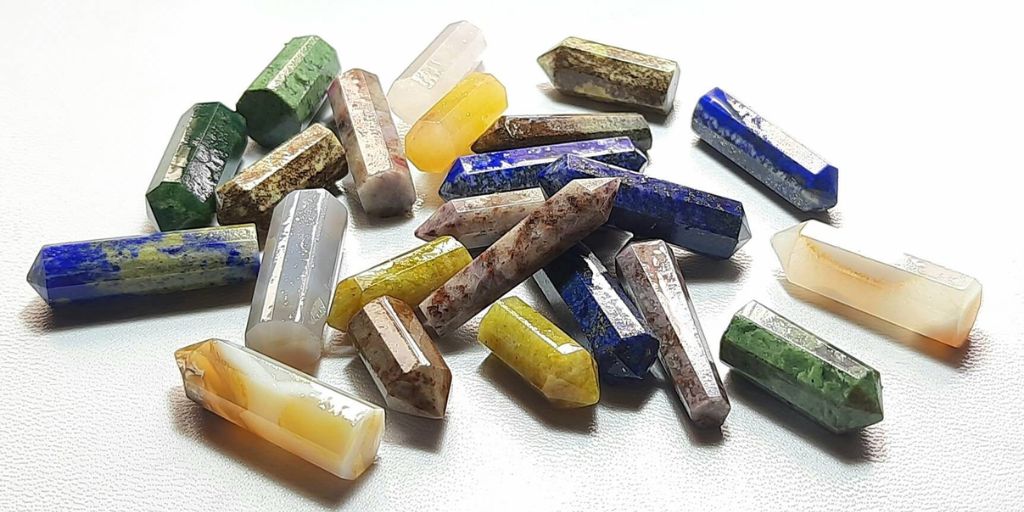
These are the most common types you’ll find in shops and online.
Artisans select a solid piece of rough stone and carve it into a tall piece with even faces.
The number of sides can vary. Six sided is the standard but four and eight sided styles also exist. The faces are polished to a smooth shine.
The faces are polished to a smooth shine. This high polish gives them a glass-like finish that highlights internal patterns like inclusions or color zones such as bands in fluorite, shimmer in labradorite or clear transparency in quartz.
Obelisks
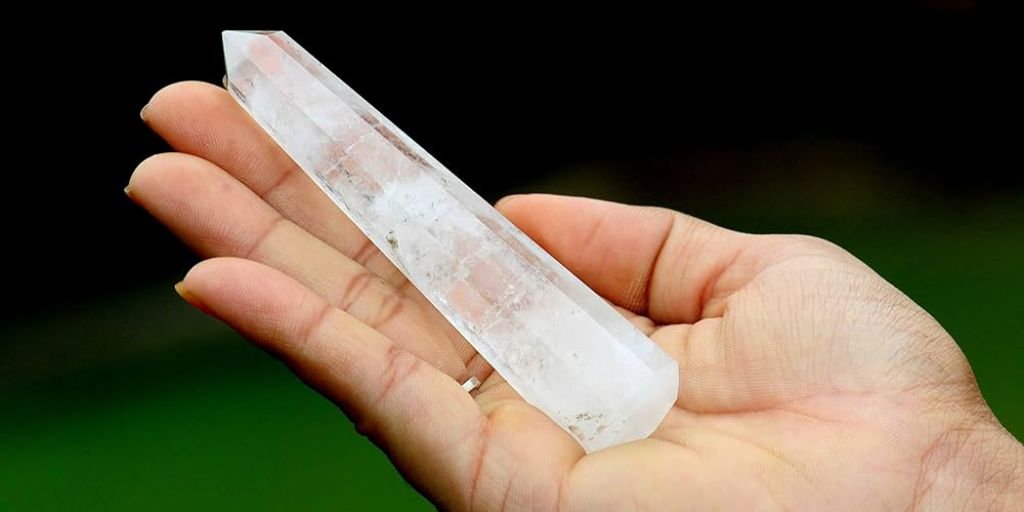
The obelisk shape is long, narrow and usually has a square or rectangular cross section creating a distinctive pyramid-topped column. It tapers slightly toward the top.
This four-sided design is said to symbolize balance and harmony, concentrating on crystal qualities and radiating them outward from the top.
The obelisk shape has been significant throughout history from ancient Egyptian monuments to modern crystal carvings.
A crystal obelisk is popular for shelves and entry tables because it looks architectural and neat.
Wand-Style Tower
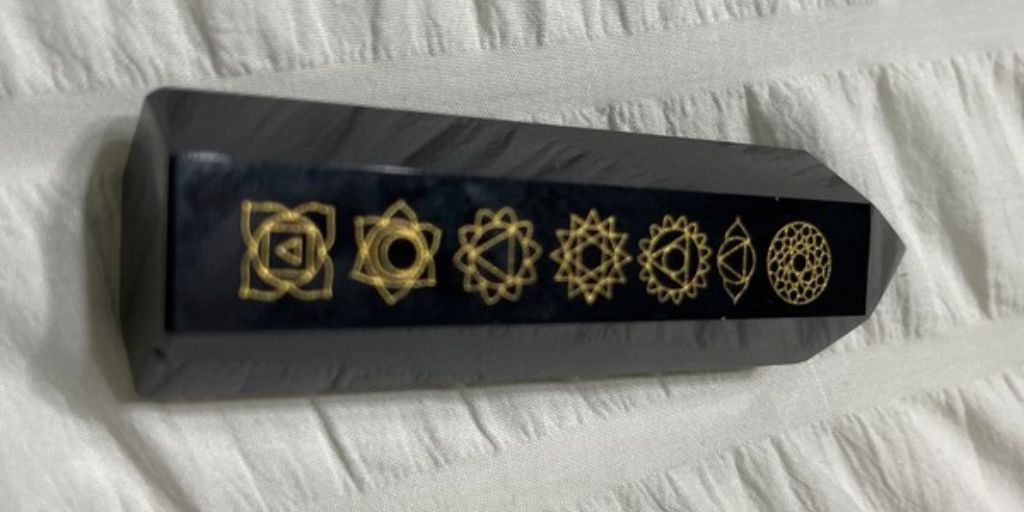
A wand-style tower is slimmer and more elongated than a standard tower.
It features a sharp, defined tip and a narrow base, giving it a more tapered, wand-like appearance. The sides may be either rounded or flat, depending on the cut.
Because of their pointed shape, these towers are often chosen for practices that involve directing intention or focusing attention.
They can stand upright as decorative pieces, yet they are also comfortable to hold due to their slender form.
Many people use them in mindfulness routines and they are sometimes sold in sets for coordinated display or as accent pieces in home decor.
Generator Tower
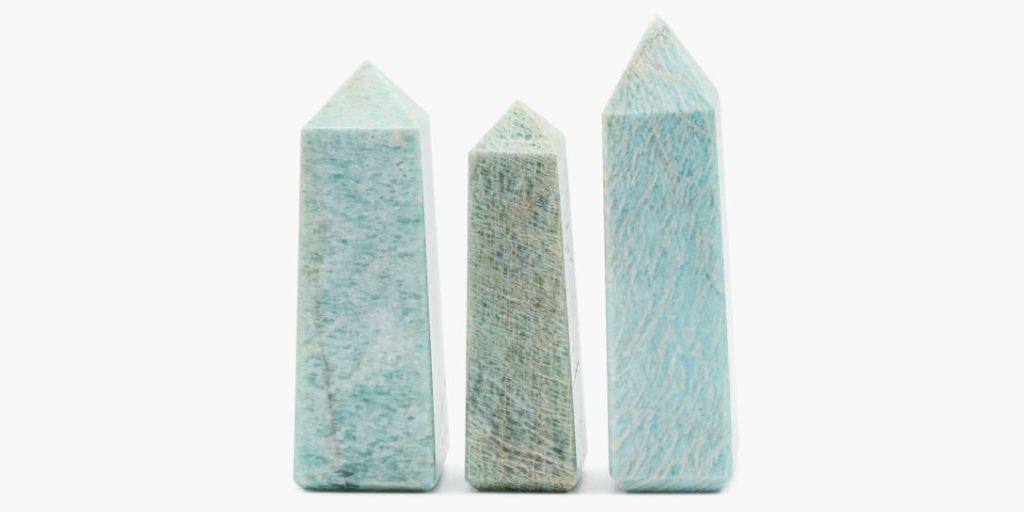
A generator tower is carved with a focus on symmetry.
Most have six equal faces that meet at a precise point. The tip is centered and sharp and the sides are straight.
This style is chosen for its clean geometry and balanced appearance. The cut highlights the internal structure and gives the tower a disciplined look.
_______________
In short, each type has a slightly different visual effect.
Natural points feel rugged and organic. Cut towers feel modern and clean. Obelisks look structural. Wand style towers look sleek. Generator towers display strong symmetry.
Knowing the differences helps you choose the form that suits your space.
PART 3: The Right Places to Keep Crystal Towers
1. Desks and Workspaces
Crystal towers are ideal for office desks, study tables or home work areas.
Their upright shape adds a touch of elegance while acting as a visual anchor, helping maintain focus and a tidy environment.
They pair well with computers, notebooks or other office accessories.
2. Living Rooms and Common Areas
Crystal towers work beautifully on shelves, coffee tables, side tables or mantels.
They add height and structure to decor arrangements and can be combined with books, plants or decorative objects to enhance the space.
3. Bedrooms
Nightstands, dressers or bedside tables are common spots for towers.
They create a calm, balanced atmosphere and contribute to a relaxing environment.
4. Entryways and Hallways
Placing a crystal tower near the entrance, on a console table or shelf, makes a welcoming statement and adds visual interest without taking up much space.
5. Quiet or Reflective Corners
Small personal nooks for reading, journaling or quiet time benefit from a crystal point’s presence.
Its shape helps anchor the space and create a sense of focus and intention.
6. Display Cabinets and Shelves
Crystal towers are perfect for display arrangements in cabinets, curio shelves or any collection setup.
Their vertical form adds contrast and highlights the stone’s natural patterns.
7. Crystal Grids or Decorative Groupings
In groupings of crystals or natural objects, a tower often serves as the centerpiece due to its tall, defined shape.
8. Offices and Professional Spaces
Corporate offices, reception areas and conference rooms can feature towers as elegant decorative accents that add a natural element to formal settings.
9. Spiritual or Wellness Centers
In yoga studios, retreat spaces or wellness centers, crystal towers are often used as focal pieces in corners, therapy rooms or quiet areas for reflection.
10. Other Ideal Spots
- Kitchen counters or windowsills for a touch of natural beauty
- Bookshelves alongside other decor items
- Any stable surface where it can be admired and safely displayed
PART 4: Popular Crystal Tower
Clear Quartz
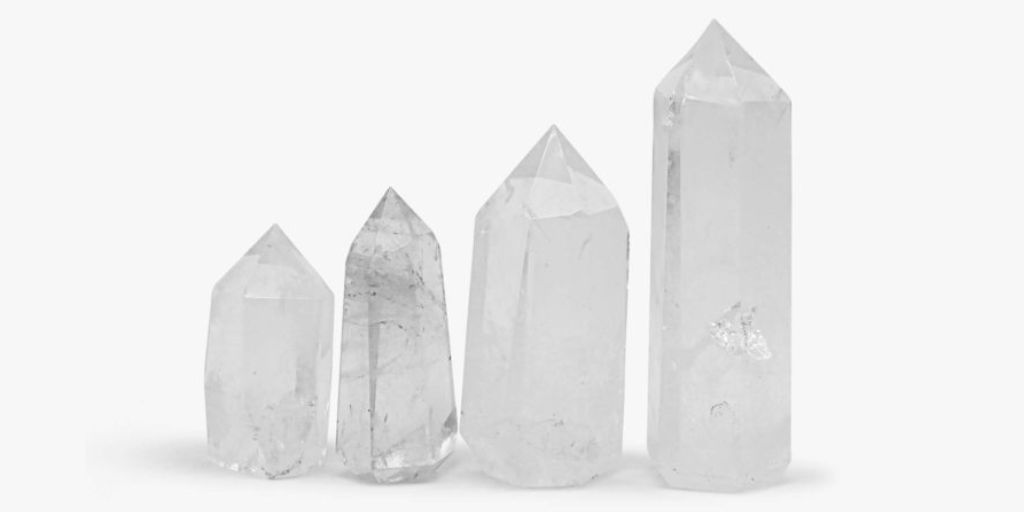
- Appearance: Transparent or milky with visible internal lines.
- Hardness: 7 on the Mohs scale.
- Notes: Durable and widely available in natural points or carved towers.
Clear Quartz crystal towers are the most versatile and widely chosen. Their clear structure allows light to pass through and complements other crystals in display arrangements. They suit any room or decor style, making them an ideal choice for beginners.
Amethyst
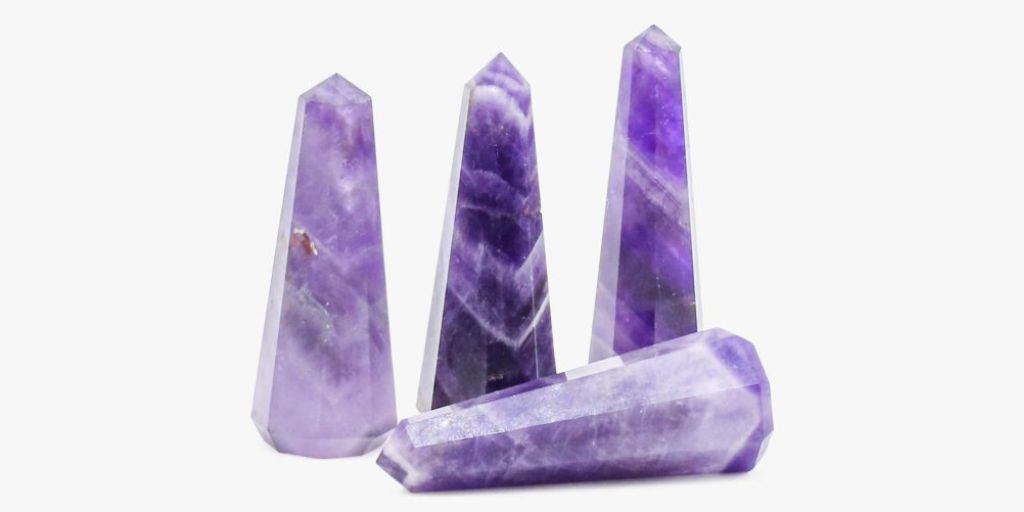
- Appearance: Purple shades ranging from pale lilac to deep violet.
- Hardness: 7 on the Mohs scale.
- Notes: Available in polished and natural forms.
Amethyst towers are prized for their deep, calming colors. They are commonly placed in bedrooms or quiet spaces to create a soothing, tranquil environment. Each crystal tower is unique with natural variations in hue and tone.
Rose Quartz
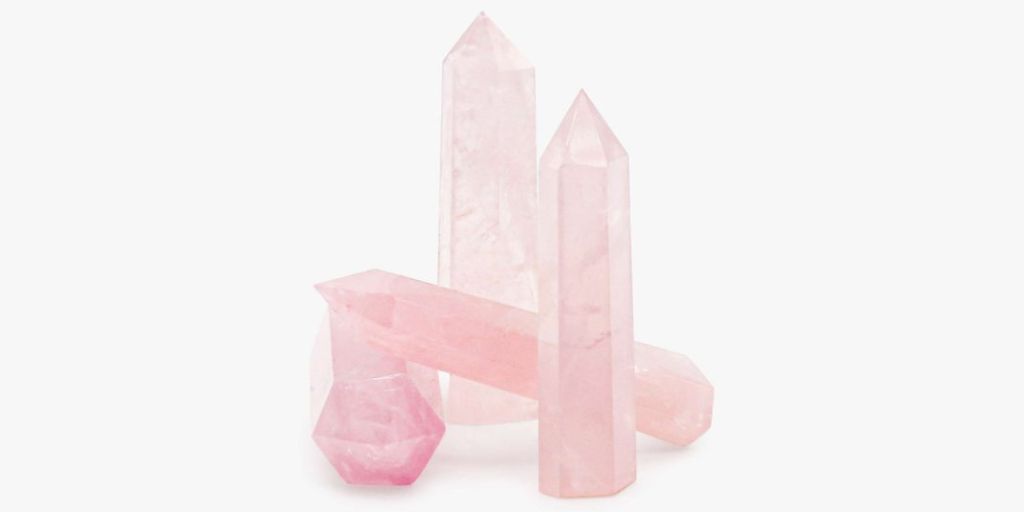
- Appearance: Soft pink, sometimes slightly cloudy.
- Hardness: 7 on the Mohs scale.
- Notes: Gentle tone, complements light or warm decor.
Rose Quartz towers are associated with love, compassion and a nurturing ambiance. They work well in bedrooms, living rooms or personal corners, adding warmth and a soft, inviting touch to any space.
Fluorite
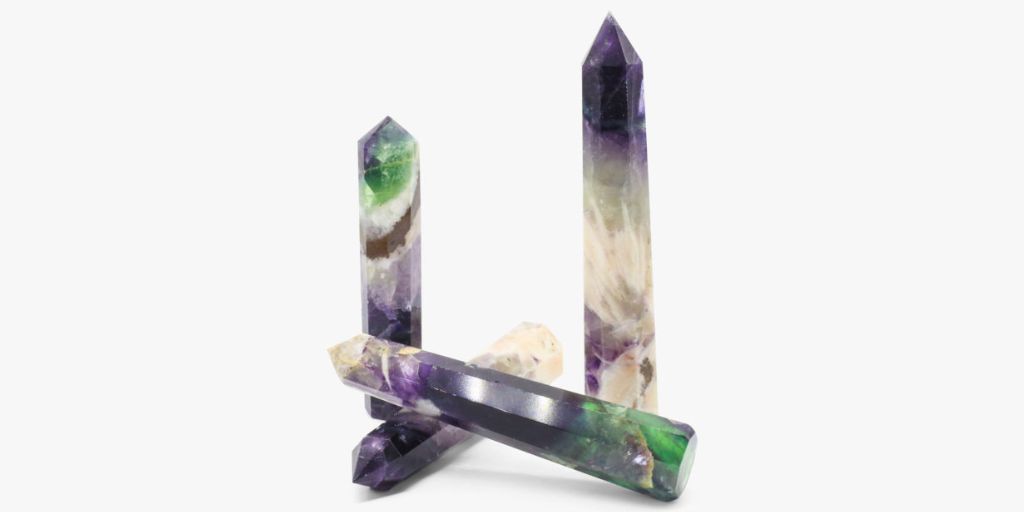
- Appearance: Bands of green, purple, blue, and clear sections.
- Hardness: 4 on the Mohs scale.
- Notes: Softer than quartz, handle and store carefully.
Fluorite towers are visually striking with their layered colors. They are often chosen for workspaces or study areas because their patterns draw focus and enhance clarity in surroundings. Each tower is a natural work of art due to its unique banding.
Citrine
- Appearance: Yellow to golden-brown hues.
- Hardness: 7 on the Mohs scale.
- Notes: Known as the “merchant’s stone,” it fits offices or financial areas.
Citrine towers are bright and uplifting. They are often placed near cash registers, desks or home offices for a cheerful and optimistic atmosphere. Its golden tones bring warmth and visual brightness to any setting.
Tiger’s Eye
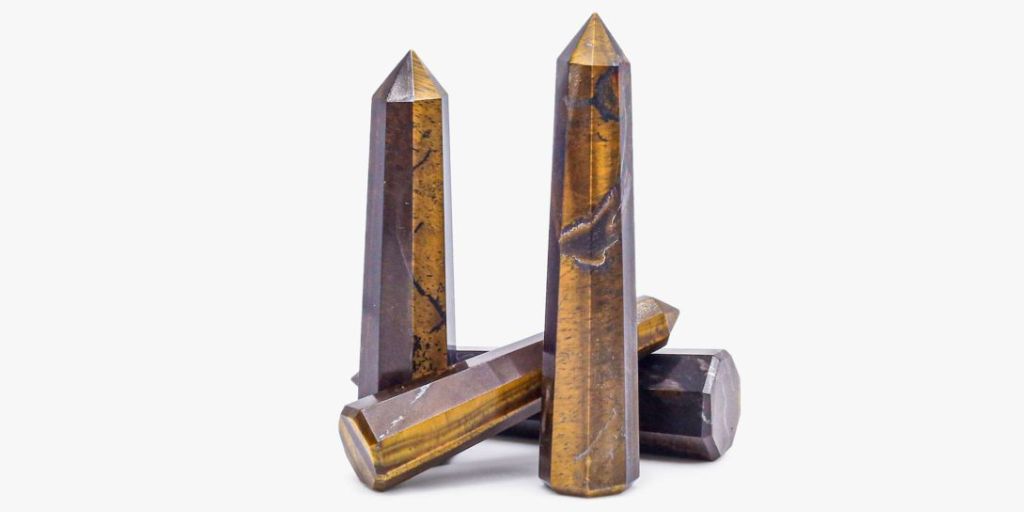
- Appearance: Brown and gold stripes with a silky shine.
- Hardness: 6.5 to 7.
- Notes: Best displayed under good lighting to highlight its chatoyancy.
Tiger’s Eye towers feature distinctive golden-brown bands that shimmer when light moves across them. They are ideal for entryways or workspaces, offering a visually grounding presence. The cat’s eye effect makes each piece visually dynamic and captivating.
Pyrite
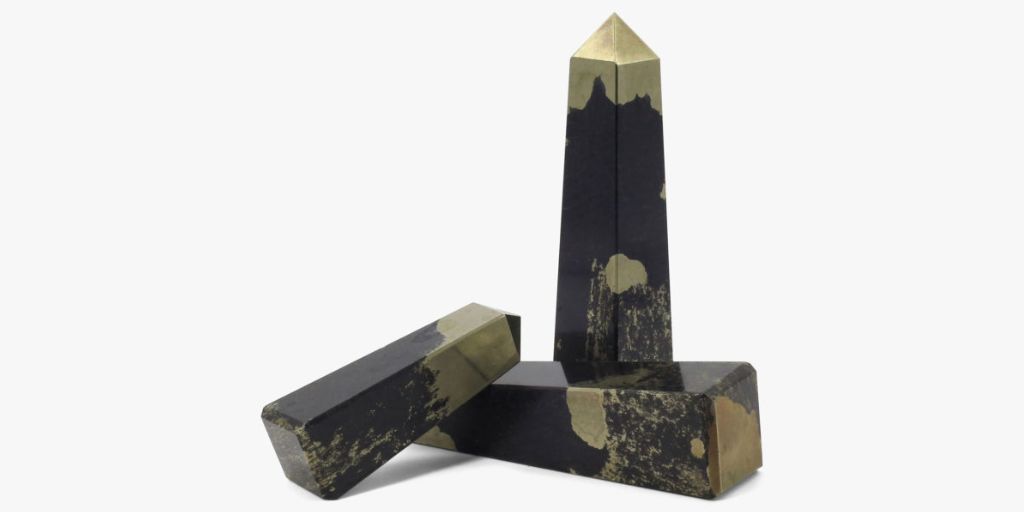
- Appearance: Metallic gold with a natural sparkle.
- Hardness: 6 to 6.5 on the Mohs scale.
- Notes: Sensitive to moisture and should be kept in a dry place.
Pyrite towers stand out for their bright, metallic sheen. They are often used as decorative accents in offices or living spaces, where their reflective surface adds warmth and a bold, confident look. Each tower catches light differently, making every piece unique.
Labradorite
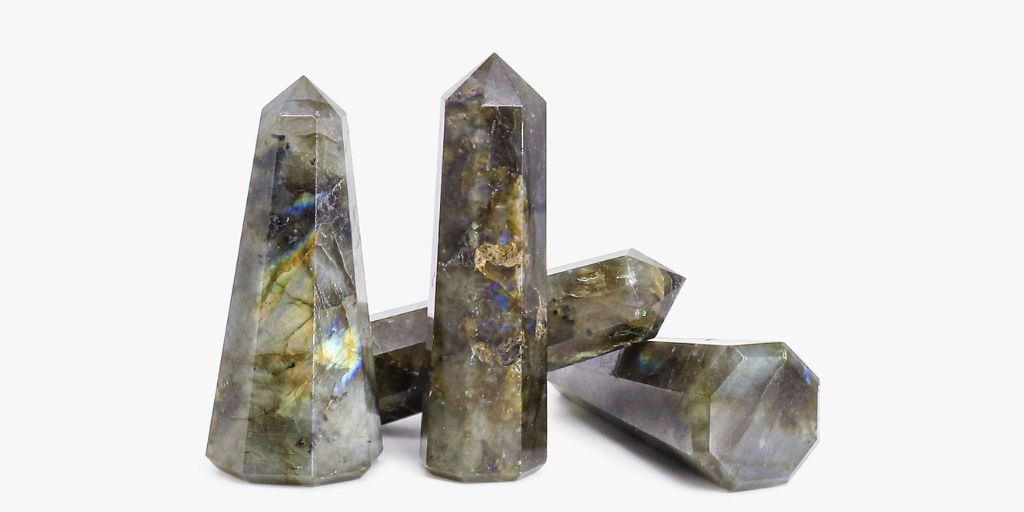
- Appearance: Grey base with flashes of blue, green, or gold.
- Hardness: 6 to 6.5 on the Mohs scale.
- Notes: Polished towers highlight their iridescent flashes beautifully.
Labradorite towers are valued for their shimmering, changing colors. When light hits the surface, they reveal stunning flashes, making them excellent display pieces. They work well on shelves, desks or as a focal point in a natural stone arrangement.
Obsidian
- Appearance: Glossy black, sometimes with a silver or gold sheen.
- Hardness: 5 to 6 on the Mohs scale.
- Notes: Can have sharp edges if chipped; handle with care.
Obsidian towers are striking with their deep, glassy black surface. The reflective shine and occasional metallic highlights make them ideal for dramatic decor spots. They are often used in entryways, living rooms or display areas where a bold visual statement is desired.
Selenite
- Appearance: White or transparent with a fibrous texture.
- Hardness: 2 on the Mohs scale.
- Notes: Very soft; avoid contact with water.
Selenite crystal towers are delicate and ethereal, with a soft, glowing appearance. Their tall, translucent form adds elegance to shelves, side tables or quiet corners. They are best handled carefully and displayed in dry areas to preserve their structure.
PART 5: How to Pick the Right Height, Finish and Cut Quality?
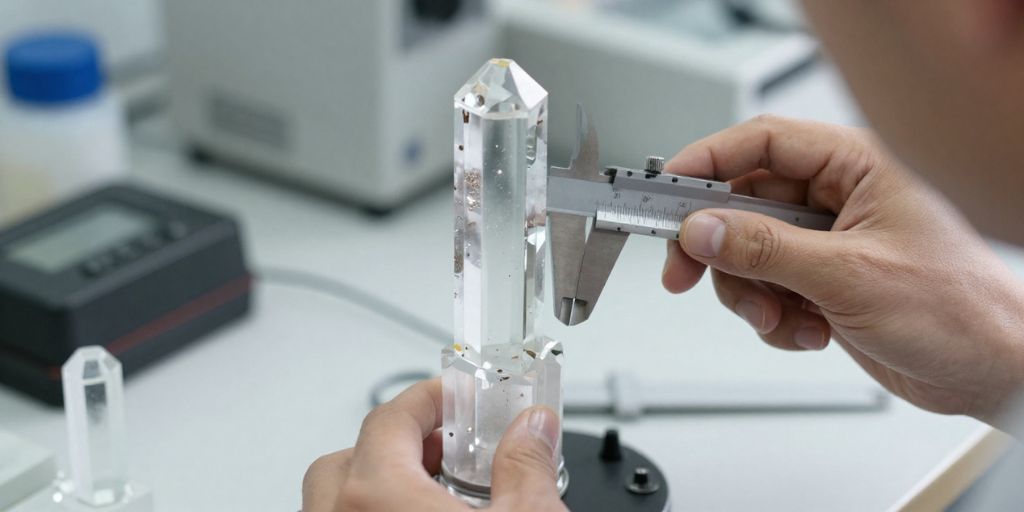
Choosing a crystal tower involves more than liking the color. A few practical factors help you decide what fits your room and survives daily use.
Height Selection
Choose height based on where the tower will stand. Height affects both visual impact and stability.
- 2 to 4 inches: good for small desks, shelves, and grouped displays.
- 4 to 8 inches: a balanced size for mantles, bedside tables, and office desks.
- 8 inches and above: ideal for large display units or floor-standing decor pieces.
A tower should look proportional to the objects around it. A very tall tower placed beside small items can look out of place, while a tiny tower on a large table may go unnoticed.
Base Stability
The base should be completely flat. Slight uneven edges can make the tower wobble. Test stability by placing it on a level surface and tapping the table gently.
Tip Condition
The point should be sharp and free from cracks. Small chips can weaken the tip over time. If buying online, look for close up images that show the termination clearly.
Finish Quality
Polish and surface texture influence how the stone catches light.
- High polish works well on reflective materials like obsidian, tiger’s eye and labradorite.
- Matte or semi-polished finishes suit rustic themes and stones with heavy patterns.
Avoid towers with uneven polish, rough patches or visible cutting marks.
Cut Accuracy
Especially important for carved towers:
- Faces should be even.
- The top point should be centered.
- The base should be flat and stable.
- Edges should not show chips.
Generator towers need the highest accuracy, since all six faces must meet cleanly at the top.
Clarity and Inclusions
Some materials naturally contain lines, clouds or small inclusions. These are normal. However, cracks that reach the surface, deep holes or unstable layers can weaken the tower.
Price vs Quality
Large towers in rare materials come with higher prices. Extremely cheap tall towers may be dyed, filled or lower-grade cuts, so always check:
- Weight
- Polish
- Material type
- Seller transparency
Making Your Selection
Start by considering what you want from your tower.
Are you drawn to a particular color? Do you want something for a specific purpose like rose quartz tower for self-love or citrine tower for abundance? Choose your material based on the properties you’re seeking.
Always purchase from reputable sources to ensure you’re getting authentic crystals rather than glass or synthetic materials.
Read reviews, ask about the crystal’s origin and don’t hesitate to request additional photos if buying online.
Trust your intuition too, if you feel drawn to a particular tower, that’s often a good sign it’s right for you.
PART 6: How to Display and Store Crystal Towers?
Displaying towers is simple, yet a few thoughtful steps can make them look even better and help them stay safe.
Display Tips
- Group by size: Two short pieces paired with one tall piece form a visually balanced set.
- Use stands or trays: They frame the towers and prevent them from sliding.
- Keep away from edges: Tall towers can tip if placed near the edge of a shelf.
- Lighting: Place reflective stones like labradorite or tiger’s eye near a soft light source to reveal their natural shine.
Interior Styling Ideas
- On bookshelves, place a tower on top of a stack of books.
- On office desks, position a small tower beside a pen holder.
- In living rooms, use a tower as a center accent on a coffee table tray.
- In workspaces, place one beside a plant to balance textures.
Storage Tips
- Wrap each tower in soft cloth when not in use.
- Use padded boxes for softer stones like fluorite or selenite.
- Avoid sealed plastic bags for stones that need some air movement.
- Keep metallic stones like pyrite dry.
Moving and Shipping
If you sell or transport towers:
- Wrap the tip separately with foam.
- Use bubble wrap around the entire piece.
- Always pack upright in a firm box.
- Fill empty space in the box so it does not shift.
PART 7: Care and Cleaning Methods
Cleaning crystal towers is as simple as long as you know which materials are water safe and which are not.
Basic Cleaning
Use this method for hard, durable stones like quartz, amethyst, rose quartz, tiger’s eye, obsidian and labradorite:
- Use a soft microfiber cloth to remove dust
- If needed, wash gently with mild soap and lukewarm water
- Rinse and dry immediately
- Never leave them soaking
Materials Sensitive to Water
Stones like Selenite, Malachite, Halite and certain calcites are water-soluble and can be damaged or even dissolved with moisture exposure.
- Wipe gently with a dry or slightly damp cloth
- Avoid scrubbing
- Keep them completely dry during storage
Other crystals like Pyrite can rust or tarnish with water exposure.
| Tip: When in doubt, research your specific crystal type before cleaning. A quick online search for “[crystal name] cleaning” will tell you if water is safe or if you need to use alternative methods. |
What to Avoid
- Chemical cleaners
- Ultrasonic cleaners
- Abrasive scrubbers
- Salt mixes
- Extreme temperature changes which can cause thermal shock and cracking
- Long sun exposure for stones that fade such as amethyst and fluorite
- Paper towels or rough cloths that might scratch the surface
PART 8: Buying Checklist and Red Flags
Shopping for crystal towers becomes easier when you know what to look for.
Checklist
- Check the height and width. Make sure it suits your intended display area.
- Examine photos of the tip, base and sides. Look for clarity, material, symmetry and finish.
- Ask the seller about treatments. Some stones are dyed or heated. Knowing this helps you understand the true nature of the piece.
- Check the return policy and packaging. Crystal towers need secure padding during shipping.
- Compare prices with similar sized items. Extremely low prices for large sizes may indicate man made glass or synthetic material.
Red Flags
- Color that looks too bright or evenly saturated in stones that are usually banded or irregular may indicate dye.
- A tower labelled as a rare stone but priced very low.
- No weight is mentioned for large towers. Weight helps confirm authenticity.
- Only one blurry photo or hidden tip/base areas.
- Sellers are unwilling to share additional images on request.
A good seller provides clear photos, accurate measurements and honest information. When buying online, take time to read the listing carefully.
Ethical and Quality Considerations
Some sellers provide mine origin or indicate if the material is stabilized or filled. This helps you understand the actual nature of the piece.
Ethical sourcing is becoming more important and reputable sellers share clear information.
Conclusion
Crystal towers combine natural formation with modern craftsmanship which makes them suitable for homes, offices and studios.
When selected thoughtfully, a crystal tower can add color, shine and structure to your space.
This guide covered the geological background of towers, the different types, the materials they come from, where to place them, how to store them and how to care for them safely without using any special practices.
If you plan to buy your first crystal tower or expand your collection, visit Tocrystal.com and use the buying checklist to make a confident decision.
Look for stability, finish, stone quality and clear seller information. With proper handling and care, your towers will stay polished and bright for years.